Setting Up a Baby Registry in Nigeria: What's Different
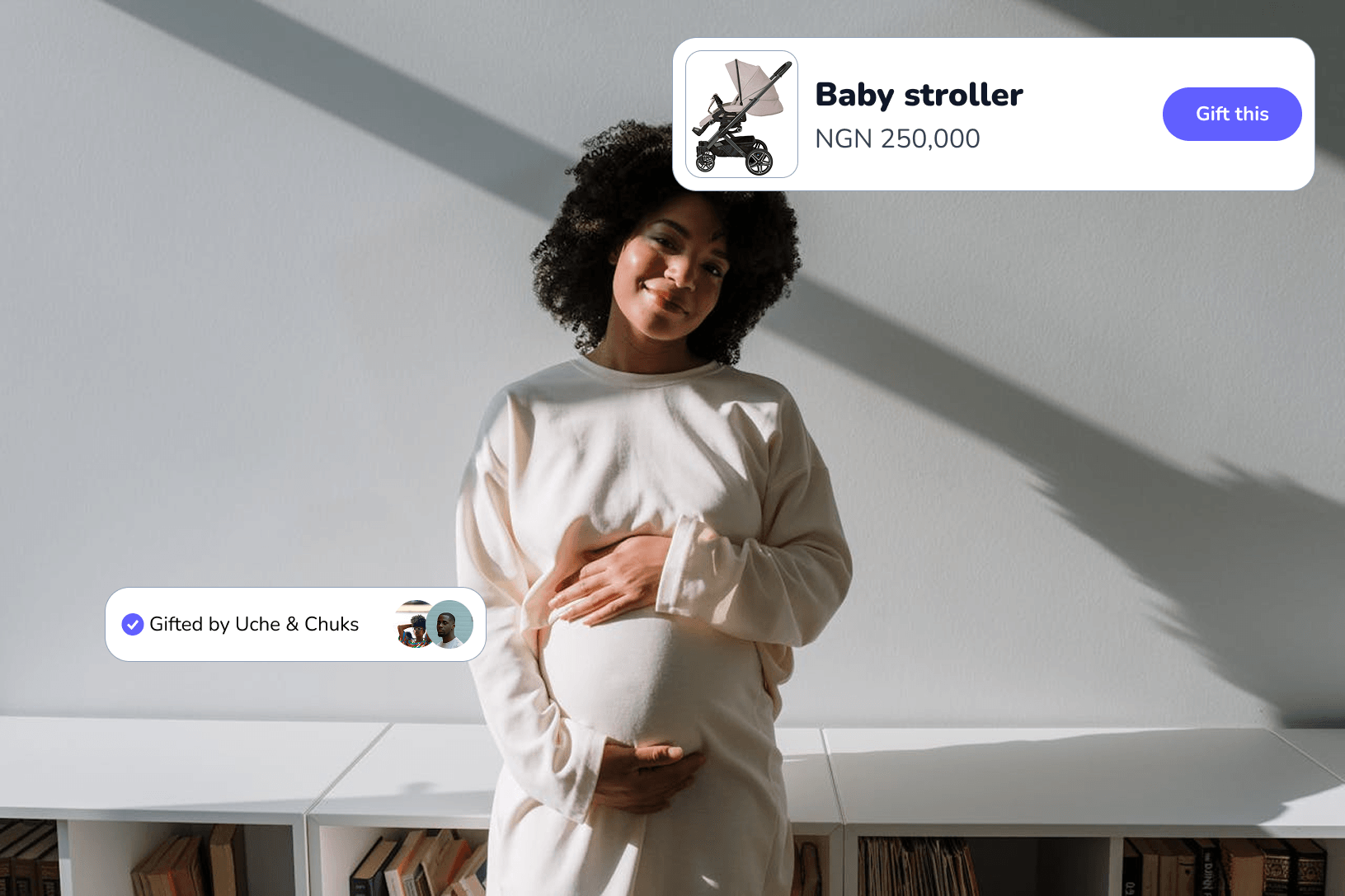
If you've searched "how to set up a baby registry" online, most of what comes back is written for the US or UK market (think Target, Amazon, Babylist, big-box stores with scanner guns). None of that quite maps onto how it actually works here. Nigerian baby registries follow a different logic, shaped by family structure, gifting culture, and how money and goods move between people.
Here's what's genuinely different, and how to set your registry up in a way that actually works for a Nigerian audience.
To create your baby registry in Nigeria, visit wishgum.com and join thousands of other expecting parents using wishgum.
1. Family isn't a guest list — it's the whole system
In many Western registries, the audience is a fairly contained group: close friends, maybe coworkers, a baby shower guest list. In Nigeria, "who's buying for the baby" often includes extended family who may never see a printed invite — aunties, in-laws, your mother's church group, your husband's colleagues, family friends abroad.
This changes what your registry needs to do. It can't just be a private link shared with 20 people. It needs to be:
- Easy to share widely — via WhatsApp status, family group chats, and social media, not just email
- Understandable at a glance — someone opening the link from an uncle in Lagos and a cousin in London should both immediately get what it is and how to contribute
- Low-friction to act on — the fewer steps between "I want to gift this" and actually doing it, the more of that extended circle will follow through
2. Cash gifting is often expected, not optional
In much of the West, registries are built around physical items. In Nigeria, cash gifting is deeply normal, especially from older relatives who may prefer to give money "for whatever you need" rather than choose a specific item themselves.
A registry that only lists physical products misses a huge chunk of your potential givers. The more effective approach is a hybrid registry: specific items for people who want to buy something tangible, plus a cash fund (e.g "diaper fund," "hospital bag fund," "baby's first outfit fund") for those who'd rather contribute money directly.
This is one of the biggest structural differences from a typical US-style registry, and it's often the first thing that trips people up when they try to use a foreign platform.
3. The naming ceremony matters as much as the birth
Outside Nigeria, a baby shower before birth is often the main event. Here, the naming ceremony is a major occasion in its own right, often bigger than any prenatal gathering. Some families don't do a baby shower at all, either for cultural reasons or simply because the naming ceremony is where the real celebration happens.
If you're setting up a registry, think about timing it around the naming ceremony, not just the due date. That's often when the widest circle of people will be looking for a way to gift.
4. Diaspora relatives need a way to give from abroad
Like many Nigerians, you probably also have close relatives and friends in the UK, US, or elsewhere who want to contribute but can't ship a physical crib home. A registry built for the Nigerian market needs to handle this gracefully:
- Accept contributions in a way that works for someone paying from outside Nigeria
- Avoid forcing every gift into a "ship this physical item" model
- Make it clear the funds or gifts will actually reach the family, since trust matters a lot when money is crossing borders informally
This is exactly where a cash-fund option (see point 2) does double duty — it's often the simplest way for diaspora family to participate meaningfully.
5. Delivery and logistics realities shape what belongs on your list
Even when people do want to buy physical items, delivery reliability, item availability, and pricing vary a lot depending on where the buyer and the family are located. A registry heavy with items only available from a single overseas retailer can leave local relatives unable to actually fulfill it.
Where possible, favor:
- Items that are realistically sourceable within Nigeria, or
- A registry structure where cash contributions let you handle sourcing once funds are in, rather than relying on every individual buyer to solve logistics themselves
Putting it into practice
The core shift is this: a Nigerian baby registry works best when it's built around flexibility; flexible in how people give (cash or item), flexible in who can access and share it (WhatsApp-first, not email-first), and flexible in timing (built to carry through to the naming ceremony, not just the birth).
If you're setting one up, Wishgum is built with this in mind — you can mix specific items with cash funds in one registry, share a single link across WhatsApp and social media, and let family both home and abroad contribute in whatever way works for them.
Looking for the full list of what to actually put on your registry? Check out our complete baby registry checklist for Nigerian mums.